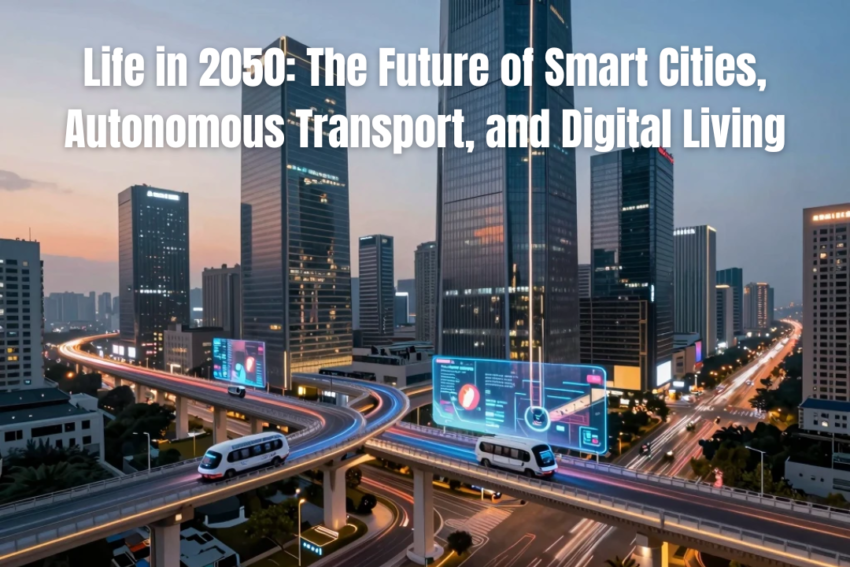
The world is changing rapidly as technology continues to evolve at an incredible pace. By the year 2050, the way people live, work, travel, and communicate will likely look very different from today. Advances in smart cities, autonomous transportation, and digital technologies will reshape modern society and create a more connected, efficient, and sustainable world.
These innovations are not just futuristic ideas anymore. Many of them are already being tested and implemented in different parts of the world. Over the next few decades, these technologies will grow stronger, smarter, and more integrated into everyday life.
In this article, we explore what life might look like in 2050 and how smart cities, self-driving transportation, and digital living will transform the future.
The Rise of Smart Cities
One of the biggest changes expected by 2050 is the growth of smart cities. A smart city uses advanced technologies, sensors, and data systems to improve urban living. These cities are designed to be more efficient, environmentally friendly, and responsive to the needs of their citizens.
In a smart city, everything from traffic lights to waste management systems is connected through the Internet of Things (IoT). Sensors placed across the city will collect data about traffic flow, air quality, energy usage, and public safety. This information will help city officials make better decisions and manage resources more effectively.
For example, smart traffic systems will automatically adjust traffic lights to reduce congestion. If a road becomes crowded, the system will redirect vehicles to alternative routes. This will save time, reduce fuel consumption, and lower pollution levels.
Energy management will also improve significantly. Smart grids will monitor electricity usage in real time and distribute power more efficiently. Renewable energy sources such as solar and wind power will play a major role in powering homes and businesses.
Waste management systems will also become smarter. Smart bins will notify waste collection services when they are full, reducing unnecessary trips and improving efficiency. Water systems will monitor leaks and conserve water, helping cities deal with increasing environmental challenges.
Autonomous Transportation
Transportation will undergo a major transformation by 2050. Autonomous vehicles, also known as self-driving cars, are expected to become a common sight on roads around the world.
These vehicles will use artificial intelligence, sensors, cameras, and advanced mapping systems to navigate safely without human drivers. Autonomous transportation will make travel safer, faster, and more convenient.
One of the biggest advantages of self-driving vehicles is improved road safety. Human error causes the majority of traffic accidents today. Autonomous systems will constantly monitor surroundings and react faster than human drivers, reducing accidents significantly.
Public transportation will also become more advanced. Self-driving buses and trains will operate with greater efficiency and lower operational costs. Cities will be able to provide better transportation services while reducing traffic congestion.
Another exciting development will be autonomous delivery systems. Drones and robotic vehicles will deliver packages, groceries, and medical supplies directly to people’s homes. This will make logistics faster and more efficient, especially in busy urban areas.
Air transportation may also evolve. Flying taxis and electric vertical takeoff and landing vehicles (eVTOLs) could become part of everyday transportation in major cities. These vehicles will reduce travel time and help people avoid traffic on the ground.
Digital Living and Connected Homes
By 2050, digital technology will become even more integrated into everyday life. Homes, workplaces, and public spaces will be connected through intelligent systems that respond to human needs automatically.
Smart homes will be a key part of digital living. Homes will be equipped with intelligent devices that control lighting, temperature, security, and entertainment systems. These devices will learn from the habits and preferences of residents and adjust automatically.
For example, a smart home might adjust lighting and temperature when a person wakes up in the morning. It could prepare coffee, suggest the best route to work based on traffic conditions, and remind residents of important tasks for the day.
Voice assistants and AI-powered systems will become more advanced and conversational. Instead of simple commands, people will interact with technology naturally, almost like speaking with another person.
Digital health monitoring will also become more common. Wearable devices will track vital signs such as heart rate, sleep patterns, and activity levels. This information will be shared with healthcare providers to detect potential health issues early.
The Future of Work
The workplace will also change significantly by 2050. Many jobs will be influenced by automation, artificial intelligence, and advanced digital tools.
Remote work will likely become even more common. Virtual reality and augmented reality technologies may allow people to attend meetings and collaborate in virtual workspaces from anywhere in the world.
AI assistants will help workers analyze data, manage schedules, and perform complex tasks more efficiently. Instead of replacing humans entirely, many technologies will support workers and increase productivity.
New careers will emerge in fields such as artificial intelligence development, cybersecurity, robotics engineering, and digital design. At the same time, education systems will need to adapt to prepare future generations for these new types of jobs.
Environmental Sustainability
Technology in 2050 will also focus heavily on sustainability and environmental protection. Smart cities and advanced infrastructure will help reduce pollution, conserve resources, and combat climate change.
Electric vehicles will replace many traditional gasoline-powered cars. Renewable energy sources will provide a larger share of global electricity. Buildings will be designed to be energy-efficient and environmentally friendly.
Urban farming and vertical agriculture may become more common in cities. These farming systems will grow food in controlled indoor environments, reducing the need for large agricultural areas and minimizing transportation costs.
Water conservation technologies will help regions facing water shortages manage resources more effectively.
Challenges and Concerns
While the future of technology offers many benefits, it also presents challenges that society must address.
One major concern is privacy. As cities and homes become more connected, large amounts of data will be collected about people’s activities and behaviors. Governments and companies will need to implement strong data protection policies to protect personal information.
Another challenge is the digital divide. Not everyone may have equal access to advanced technologies. Ensuring that all communities benefit from technological progress will be essential.
Cybersecurity will also become increasingly important. As more systems become connected to the internet, protecting them from cyber threats will be critical.
Conclusion
Life in 2050 will likely be shaped by powerful technologies that make cities smarter, transportation safer, and daily life more convenient. Smart cities will use data and sensors to improve urban living, autonomous vehicles will transform transportation, and digital technologies will connect homes and workplaces like never before.
While challenges such as privacy and cybersecurity must be carefully managed, the potential benefits are enormous. With responsible innovation and thoughtful planning, the future could bring a world that is more efficient, sustainable, and connected than ever before.
The journey toward 2050 has already begun, and the technologies being developed today will define how humanity lives in the decades to come. 🚀